


02
Jan 12

Pakistan NGOs missing the link

A recent opinion piece by Pervez Hoodbhoy brought back a lot of memories from early 2011. The year started with the killing of Governor Salman Taseer. The incident left the country divided and showed the gap between country’s liberals and the right-wing. It was all over the electronic and print media and for the first time, its infiltration on the ‘new media’ became visible as well. Twitter feeds related to Pakistan were often ‘throttled’ with threats towards those who supported the late Governor.

The whole incident often left me wondering about the role of civil society, especially the NGOs, in combating extremism and intolerance in the country during the last decade. I was part of many programs and projects that were aimed at promoting social and inter-faith harmony. It is no secret that executing and implementing these programs at the grass root level is not an inexpensive task. A four-day face-to-face training event for about 6 activists in one city would include boarding, lodging and transport costs. And the number of people these activists could reach through physical meeting was clearly limited, depending on the resources and advocacy tools used.

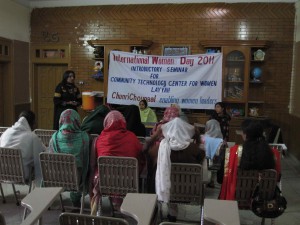
An example of an inter-faith meeting

Compare this outreach to the number of people who are exposed to the Friday khutbas or sermons that Hoodbhoy points to in his article. In the country’s estimated 250,000 mosques, 10 percent are assumed to be inciting hate for people of other faiths and opinions every week. Clearly the clerics of these mosques have a better infrastructure for outreach and to easily disseminate their message. It is one of the main reasons why disparity and intolerance towards other groups is alarmingly on the rise. And since there are no measures to counter it, chances are, it will continue to rise.

No doubt the NGOs alone are no alternative for handling these volatile issues. The state needs to address it as well, through legislation and implementation of the rule of law.

Before, advocates of new media had a hard time explaining why it was important to be on board with the modern communications tools. Even though, in 2009 Iranians showed the potential of ‘new media’ as a communication and lobbying tool, it was the Arab spring that showed the world. Of course, direct comparisons cannot be made due to the difference in the literacy rate and percentage of Internet users, both of which are much lower in Pakistan, than, let’s say, Egypt.

However, the point remains, that the use of social media has provided a much cheaper solution to lobbying, sharing messages and discussing, all of which raises awareness. But this vast potential is yet to be tapped to the full. I see a genuine lack of online presence from the community level organizations. Even if they do have a presence, it is mostly not very interactive for the users or officials become active online only in their individual capacity.

In Pakistan, many local organizations are still making excellent efforts for safeguarding the rights of minorities and promoting peace in their respective communities but yet have to be on board with exploiting new tools to spread their message across. Many international organizations rely heavily on online ‘community building’ through volunteers. One can only hope that other civil society groups will follow the footsteps of the recent online ‘success’ of Pakistan Tehreek-Insaaf (PTI). PTI has managed to really engage the Pakistani youth (both home and abroad) in their activities through the use of social media tools and platforms. This in turn has had a great impact on PTI’s follower-ship.

In short, Pakistan’s civil society and local NGOs need to start taking their presence online seriously if they are to really bring a lasting impact to the current state of affairs in Pakistan, a situation which currently seems to be only changing for the worse. Alternative media such as blogs and online discussion forums need to disperse equally throughout the country so that the voices of the under-represented and the neglected can be heard as well. Online inclusion of various sectors is fundamental in order to reach an authentic and balanced debate on the country’s democratic and human rights’ values.


16
May 11

The promised lands of the Land of the Pure:

A mazareen child working during the wheat season

On the 28th of March 2011, a call was given to the farmers of the military farms for a march to Lahore. The long march was organized by the Anjuman Mazareen Punjab (AMP), a peaceful movement of peasants and landless tenants of the military farms located in ten districts of the Punjab province. In response to the call, thousands of tenants including men, women, youth and even children were out on the roads. There were hundreds of vehicles, mostly tractor trolleys and motor bikes, as well as many people who came by foot. The rally comprised of men, women, elderly, youth and even children. Everyone chanted the slogan: Maliki ya Maut (Ownership or death.) The police stopped the protestors from Khanewal, and things did not remain peaceful. The rest of the event continued as planned and the mazareen from different parts of Southern Punjab made it to the provincial capital. This time, the movement even made headlines in both the print and electronic media. The founder of the AMP, Younis Iqbal, was sad about the clash on the Khanewal unit. “The long march was successful as it made a very strong impact on the spirit of the movement, but the Khanewal mazareen could not join us,” Mr. Iqbal said.

What had happened in Khanewal is what the mazareen had been facing for over a decade now. In an interview with Mr. James Masih, an eyewitness, he said that when the demonstrators reached Khanewal city, the armed police force were standing on the roadsides. The mazareen were not stopped, but when the procession was passing through, the police started throwing tear gas at the demonstrators. Women and children were beaten while men and young boys were arrested. Since the demonstrators were not prepared for this assault, they decided to flee back to their villages instead of fighting. Mr. Masih explained: “We were told by the administration to not take part in the long March. They tried to stop us by saying that a high level meeting was to be held on the 29th, a day after the planned march. The farmers ignored the message and still showed up for the event. It was a tactic by the administration to try and cancel the rally so that the struggle of the farmers is halted.”  However, Mr. Masih has no doubt that the mazareen will continue to fight until their last breath.

Since 2000, numerous rallies and clashes have taken place to suppress this movement. What is also surprising is that in a country with a vibrant media, this was one movement which was successfully stopped from making headlines. In the past, the movement was not considered worthy of attention of many civil society groups. Only a handful of activists from Multan and Lahore remembered these movements on special days like the May Day celebrations. Mr.Iqbal said the newspapers were told not to cover an anti-establishment resistance. “We were being portrayed by the establishment as terrorists, and giving us media attention would give undue benefit to the resistance,” he said.

Events like these have created an atmosphere of doubt and distrust among the mazareen, who have been promised repeatedly to be granted ownership rights by the government and local politicians. In 1998, Former Prime Minister Nawaz Shariff promised the tenants the ownerships rights in return to their votes. Numerous struggles were previously crushed, as they were not organized effectively and the farmers did not know whom to go to for help.

The mazareen movement has been through a lot of challenges. Mr. Younis Iqbal, the founder of the AMP, was in jail for eight months for ‘inciting the peasants to rebel/resistance.’ There have also been many other instances of beatings, arrests, tear gas attacks, shelling, torture and even killing, but nothing seems to have deterred these workers. The peasants still continue to hold to their slogan of Maliki ya maut.

While talking about those who died during the clashes as well as those that died due to a lack of medical care when the villages were under siege by the security agencies, Mr. Iqbal explains: “No movement is successful unless there is blood shed involved in it, and we have given the blood of fourteen innocent mazareen in this fight. Therefore, we strongly believe we will succeed in this fight for freedom from slavery. We are not afraid. We illiterate people have been able to reach so far in this struggle with our persistence and strong will power.”

One of the most compelling arguments the mazareen made with the people, who came for negotiations was the freedom from slavery. “We live in Pakistan, a country that has gained independence. But we mazareen are still not free, we are still forced to live under the [Colonization] Law of 1912. We want to be part of the country’s independence too so that we can finally breathe in the air of independence.” Mr. Iqbal said. The senior army officers did not have much to say to that he recalled.

Mr. Iqbal values the role of the Punjab Board of Revenue for their role in the mazareen struggle. The mazareen went to the Revenue officials to inquire about the registered owner of the farms in year 1999. They discovered that the organizations that had been collecting revenues, forcing them to give up half of their produce for decades, were legally not entitled to do that. “Since the owner is the government of Punjab, the Revenue Board was the only authority to claim any dues from the farmers,” Mr. Iqbal said. “This is why after the introduction of the new yearly lease system, the peasants have refused to pay cash or share produce to the managers of the farms,” he added. This event was a turning point in the struggle of the mazareen.

Today the movement has finally received attention at the national level. After the long march to Lahore, the Prime Minister Yousaf Raza Gillani has assured the AMP that the matter will be resolved soon. Committees have been formed at provincial and national level to transfer the ownership rights to the mazareen. “We were invited to the initial meetings that were held by the Punjab Board of Revenue, but then the local politicians stepped in to be included in these committees. They feared that if they were not part of it, it will affect their vote bank in those villages.” Mr. Iqbal said.

The leaders of AMP are now hopeful for a positive result. Their story is one of a kind in the history of Pakistan, as it is a struggle for the rights of the landless tenants, which was not led by the country’s elite but by the untaught peasants themselves. These peasants, who have been suppressed for a century now, are hoping for a brighter future for their children. Most of them remained uneducated due to economic burdens and hardships of farming. Now the mazareen are looking forward to start development projects for the welfare of their communities and villages.

Background and History Continue reading →


29
Mar 11

Can legal reforms protect Pakistani women?

Women of Pakistan

As Pakistan is moving towards being an economically sound country, the situation for the 52 percent of the country’s population which compromises of women is not catching up with the speed. One of the recent improvement efforts is the introduction of Domestic Violence (Prevention and Protection) Bill 2009, the first legislative step of its kind in the history of the country, which covers effective legal measures, civil remedies and compensatory provisions for the aggrieved persons. Stories like that of 17-year-old Mafia Bibi from Sahiwal city keep plunging us back into the dark realities of where our society actually stands today. Mafia’s brother brutally chopped off her head, ears and nose in the name of ‘honour.’ According to the local newspaper, Mafia had allegedly eloped with the man she loved. The family hunted the couple down and brought them back.  It was decided that the two would be married off but in the meantime her brother indulged in the cold-blooded act.  Many cases of this nature go un-reported. In most reported cases, like that of Mafia’s, the police and the judiciary manage to develop a soft spot in their hearts for the abuser, as the victims are thought to have provoked the abuser to do this. Women are confined to the house, which is considered to be the safest place for them. The same home has the potential to become the deadliest place to be, if as a woman she fails to comply with the archaic social and cultural norms.

Honour killing is an extreme form of domestic violence, executed by male family members when they feel that the woman has stepped out of the moral boundaries and freedom allotted to her. Honour, in this case is always related to the actions of the women. People go to extremes in order to ‘preserve’ the family honour. According to Human Rights Commission of Pakistan (HRCP), 647 out of the 1404 women murdered were honour killings in the year 2009. In the sub-continent culture, it is of utmost importance that the female sexuality remains under the control of men. A woman challenges the inherent superiority of the males in her family when she chooses her own marriage partner. This is an act that does not go un-punished. Punishment becomes a necessity so that other women do not follow the same footsteps. The family honour is traditionally associated with the nose in the sub-continent region’s local traditions. An old proverb implies ‘cutting the nose’ with bringing shame to the family by one’s actions.  This is why punishment for women in most cases has been the age-old ritual of literally cutting off the nose of the victim as seen in Mafia’s case. Continue reading →


01
Mar 11

ICTs and the case of young Pakistani women

A close friend, 19 year old Nazira, wore her best dress one evening. She came to show me her outfit before she went out to see someone ‘special’. Three hours later, she returned devastated; she could hardly speak. She wore a ‘burqa’ on top of what was left of her dress. Her rosy cheeks looked pale and eyes were sore. She was gang raped by the person she went to see and his friends. A male member from her family had seen her in that condition. I gave her clothes and asked her mother to pick her up. She was not allowed to leave her house following that incident. Nazira got into a ‘relationship’ with the person, a complete stranger, after a few casual chats via mobile phone with him. He had pressurized her into seeing him. It is still ambiguous how the call started.

By December 2010, the cellular subscribers reached at 102,777,387 according to Pakistan Telecommunication Authority (PTA) statistics putting the cellular teledensity to 61.7 percent. It is a frequent practice to spam mobile phone inboxes with random contact numbers ‘available to chat.’ It has been an epidemic how SMS asking for ‘friendship’ circulate and how young people start interacting. The Pakistani youth seemed to have brought it to the level of instant chat messaging on the internet, not realizing the consequences of making your personal number public. This however, is more intrusive than the latter.

The responsibility lies on the inability of the young people to interact freely with the opposite sex due to the social and cultural norms. This has taken a toll on the Pakistani society. The behaviour of young people has changed significantly over the past decade with the advent of modern tools of communication. It almost seems inevitable that the so called ‘friendship’ will be an intimate one as no other opportunities exist for socializing. But the unwary young women like Nazira learned the harsh way how this practice is putting them in danger of exploitation and violence. Continue reading →


31
Dec 10

Thal Desert

Going back to the roots…somewhere in Layyah District


29
Nov 10

Rebuilding the Nation, One house at a time

A few months back, Pakistan once again got the attention of International community, but this time un-related to the religious extremism. The worst flooding in the recorded history of the country had hit and it was a catastrophe of a magnitude the country was not prepared for. Certainly not the unwary population of Khyber Pakhtunkhwa province where it all started, who did not receive early warnings. The situation got many people restless and everyone wanted to do their part in helping the flood victims.

A little girl standing next to her house in Nowshera Kalan village located at Kabul River bank

Nadeem Jamil, a banker from Lahore and his two friends Mudaser Nawaz and Adnan Kamal were one of the many young volunteers who refused to stay at home and watch the devastation of mighty flood that changed the lives of about 20 million people in Pakistan this year; He ended up raising up to 22 Lakh rupees, enough to build 25 houses for flood victims in flood struck village Nowshera Kalan!

Like many other Pakistanis, they too had endless sittings with friends and other contacts that were facing the dilemma of which public fund to donate to. The distrust of just about any public fund was immense but people still had the eagerness and enthusiasm to reach out to those unfortunate families who had lost all their possessions and even loved ones in the flooding. This boosted their motivation and the three friends decided in mid-September to drive some 400 kilometers to where the floods started and hit hardest, Nowshera city of Khyber Pakhtunkhwa province. The city is located on the banks of the river Kabul, which swells in summer due to the heavy monsoon rains and indirectly from the melting snow of Hindu Kush Mountains through its main tributary Kunar River. The Kabul joins the Indus River near Attock, over 20 kilometers from Nowshera. The three friends met army officials engaged in relief efforts and while surveying the surrounding villages, which were not part of the city’s cantonment area, they reached a village where little children started running after them, pulling their clothes to get their attention. “It was so humbling to turn around to see a 2 year old bare-footed girl with minimal clothing pulling my shirt, trying to tell me something in Pashto,” said Mr.Jamil with a sad voice. This village was Nowshera Kalan, located on the north bank of the Kabul, whose population mostly comprised of local fishermen. The remnants of their mud houses still showed their remaining debris.

Nadeem Jamil, Bank Manager and now a successful aid worker too

‘It was risky actually to go into the village like this, to barge in, as it were, as the Pakhtun brothers are strict observers of ‘parda’ for their women and no matter if they possess much else, they always possess a weapon for protection!’ Nadeem said smilingly. The people had been provided with three months ration by the Pakistan army, so during the meetings with the locals, concerns mostly pointed towards the approaching winter where many families were left without a roof on their heads. His friends had already started spreading the news of their visit through MMS and SMS while talking to the village elders, which showed they felt they had reached the right place and the right people. ‘We immediately started communicating via mobiles with people who showed interest in contributing in our effort and we still use this technique now that 50 percent of our target is complete,’ he said while browsing through his notebook folders filled with images and videos they had taken.

By the time, they got back to Lahore after their initial visit, they already had people pledging money, the first contributors being their own families. One of the parents of a friend cancelled their trip to Saudia Arabia for ‘Hajj’ and donated the money for the cause. This kick-started their plan to provide shelter, as it was enough to start the construction of 6 houses! The approach of the young group was both practical and interesting. They hired a contractor through the army officials who had the data of affected families, and they got an estimate of Rs. 85,000 to build a house which had two rooms, a veranda, a kitchen and a bathroom. Not all the affected families owned a kitchen or bathroom previously and they made sure they selected the most deserving which included widows and physically challenged people. To date, they have successfully built 12 houses and another 13 are under construction. ‘We are very confident and satisfied with the work we have done and also have something very concrete to show to our very generous individual donors who made this dream a reality!’ the determination in Nadeem’s voice was clear. They plan to continue the work for this as long as they have contributors. He said they did not want to rely on funds from aid organizations or government to sustain their effort; they did whatever was in their power to make a change that was solution-oriented and long-lasting.

This is just one story of how both young and old Pakistanis from every field of life left the comforts of their homes and reached out to help those whose lives were washed away overnight by the worst flood to hit Pakistan in recorded history, engulfing one fifth on the country. Despite all the challenges we are facing as a nation, there are numerous stories like these that we need to celebrate to keep going. Countless leaders appearing on Pakistani talk shows look up to the younger generation of this nation to do something about the situation we have gotten ourselves in. We do not need them to tell us that anymore!

Reconstruction underway: Twelve houses have successfully been constructed and more being built.


23
Sep 10

Videos from the rally to support the DCO Layyah and EDO (Health)

Three videos from the rally on 20 september 2010.

First, Dr.Khalid Naeem (District Health Officer) of Pakistan Medical Association Layyah district talks about external, political reasons for the strike, unrelated to the original demands.

Next, A Layyah district representative of the Pakistan Medical Association mentions the nurses should have chosen a different way to protest, if they just wanted their demands met.

Last, but not least, Dr. Gulzar Siratey condemns the involvement of some media and political representatives in matters of the layyah nursing school.

All videos from 20th September 2010


20
Sep 10

Layyah student nurses on the barricades

During a recent visit to Layyah, I came across a road blockade which was not the usual barriers in reaction to security concerns in the bigger cities of Pakistan. In a town of nearly 500000 people, the main road in front of the District Headquarters hospital of Layyah was blocked by angry nursing students on September 17th and their banners demanded ‘removal of incompetent principal and Executive District Officer (Health)’ and ‘protection for nurses.’

Student nurses are sitting outside of the District Headquarters hospital in Layyah protesting, 17 September 2010

Student nurses are sitting outside of the District Headquarters hospital in Layyah protesting, 17 September 2010

In a region where ‘pardah’ is strictly observed by women, so much that these student sometimes refuse to attend male patients, the seven hour protest under the leadership of MPA Punjab Baber Khitraan of PPP was implausible to both the hospital administration and the people of Layyah. The students said they were on strike because they faced a shortage of teaching staff and the Principal of the Nursing School forced them to learn about her religious beliefs.

The District Coordination Officer Layyah Javed Iqbal had to intervene on the same day and received an unkind treatment by angry protesters, but still agreed to all their demands. However, the next day, the students further amazed the administration of Layyah city and DHQ when they decided to go for another demonstration, only this time demanding removal of DCO Layyah! They also told members of press the next day that they were now protesting for not being allowed to keep a mobile phone in their possession. The students refused to go back to the wards or home and decided to sleep in the press club instead. The event led to yet another demonstration in the city where people of Layyah, including the business community and doctors showed their solidarity with DCO, who according to them performed his duties well in the time of the flood disaster.

What are the nurses doing in press club when the DCO agreed to accept all their demands? Why are they still not going back to the wards after the Nursing School Principal has been removed from her post? Was this really an issue of being from a certain religion? What are the factors that are still keeping them in the press club when their families have shown complete disagreement with their viewpoint? The issue seemed to have gotten a lot more complicated then it started out to be while some questions still remain unanswered.

For the full timeline of the events, continue reading…

Continue reading →